


Page 285 - CyberSecurityEssentialsEnglish
P. 285
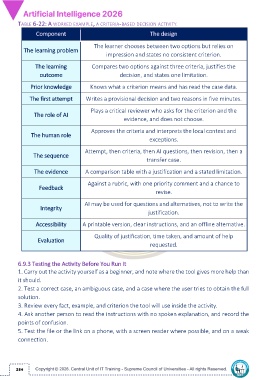
TABLE 6-22: A WORKED EXAMPLE, A CRITERIA-BASED DECISION ACTIVITY

                 Component                                          The design

                                           The learner chooses between two options but relies on
            The learning problem
                                                impression and states no consistent criterion.


                 The learning             Compares two options against three criteria, justifies the
                   outcome                            decision, and states one limitation.

               Prior knowledge           Knows what a criterion means and has read the case data.


              The first attempt        Writes a provisional decision and two reasons in five minutes.

                                         Plays a critical reviewer who asks for the criterion and the
                The role of AI
                                                        evidence, and does not choose.


                                          Approves the criteria and interprets the local context and
               The human role
                                                                   exceptions.

                                       Attempt, then criteria, then AI questions, then revision, then a
                The sequence
                                                                  transfer case.

                The evidence           A comparison table with a justification and a stated limitation.

                                        Against a rubric, with one priority comment and a chance to
                  Feedback
                                                                      revise.


                                       AI may be used for questions and alternatives, not to write the
                   Integrity
                                                                   justification.

                 Accessibility        A printable version, clear instructions, and an offline alternative.


                                           Quality of justification, time taken, and amount of help
                  Evaluation
                                                                    requested.


         6.9.3 Testing the Activity Before You Run It
         1. Carry out the activity yourself as a beginner, and note where the tool gives more help than

         it should.
         2. Test a correct case, an ambiguous case, and a case where the user tries to obtain the full

         solution.
         3. Review every fact, example, and criterion the tool will use inside the activity.
         4. Ask another person to read the instructions with no spoken explanation, and record the
         points of confusion.

         5. Test the file or the link on a phone, with a screen reader where possible, and on a weak
         connection.


        284

