


Page 280 - CyberSecurityEssentialsEnglish
P. 280
correctness, and adding automatic alternative text does not guarantee that it describes what
         the reader needs. Test the experience from the user’s perspective, ask for feedback, and
         repair the barriers. When converting content into several digital formats, established digital

         accessibility guidelines should be consulted [16].


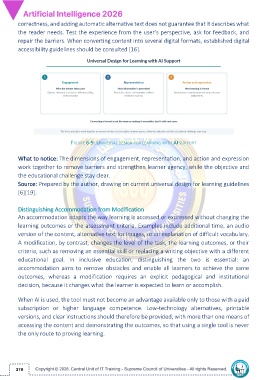
                                 FIGURE 6-9: UNIVERSAL DESIGN FOR LEARNING WITH AI SUPPORT


         What to notice: The dimensions of engagement, representation, and action and expression

         work together to remove barriers and strengthen learner agency, while the objective and
         the educational challenge stay clear.
         Source: Prepared by the author, drawing on current universal design for learning guidelines
         [6][19].


         Distinguishing Accommodation from Modification
         An accommodation adapts the way learning is accessed or expressed without changing the

         learning outcomes or the assessment criteria. Examples include additional time, an audio
         version of the content, alternative text for images, or an explanation of difficult vocabulary.
         A modification, by contrast, changes the level of the task, the learning outcomes, or their

         criteria, such as removing an essential skill or replacing a writing objective with a different
         educational  goal.  In  inclusive  education,  distinguishing  the  two  is  essential:  an

         accommodation  aims  to  remove  obstacles  and  enable  all  learners  to  achieve  the  same
         outcomes,  whereas  a  modification  requires  an  explicit  pedagogical  and  institutional
         decision, because it changes what the learner is expected to learn or accomplish.

         When AI is used, the tool must not become an advantage available only to those with a paid
         subscription  or  higher  language  competence.  Low-technology  alternatives,  printable

         versions, and clear instructions should therefore be provided, with more than one means of
         accessing the content and demonstrating the outcomes, so that using a single tool is never

         the only route to proving learning.


        279

