


Page 264 - CyberSecurityEssentialsEnglish
P. 264
but it should not write the reflection for the learner; the value lies in the person examining
         their own thinking.

         A common risk is the illusion of understanding. An explanation may seem clear while it is

         being read, so the learner feels they have mastered the topic, yet they cannot recall or apply
         it once the screen is closed. The remedy is not more explanation, but a request to retrieve

         or to produce: explain from memory, draw the relationship, solve a new example, or teach
         the idea to someone else.

         We should distinguish asking for language help from asking for the idea to be built. A learner
         writing in a second language may need greater clarity, but if the tool rewrites the whole text,

         their own voice may disappear and they may not understand the new words. It is better to
         ask for the confusing sentences to be identified, for two alternatives with an explanation, or
         for a particular language level to be preserved, and then let the learner choose and justify.

         In programming, mathematics, or statistics, a tool may produce a correct or an incorrect
         solution with equal confidence. The learner should therefore be asked to explain each step,
         test the solution on a simple case, state the assumptions, and perhaps find a deliberately

         planted error. The aim is not only to reach the result, but to build a mental model that allows
         a fault to be detected.

         Fair help does not mean giving everyone  the same  support.  Some  learners need a text

         reader, vocabulary support, more time, or an additional example. But the learning outcome
         must stay clear, and we must distinguish an accommodation, which removes a barrier, from
         a modification, which changes what we expect to be learned.


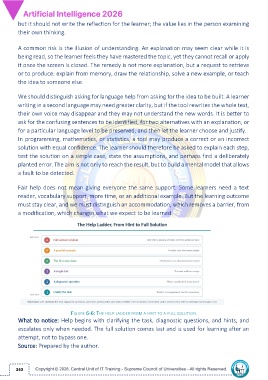
                                 FIGURE 6-6: THE HELP LADDER FROM A HINT TO A FULL SOLUTION
         What to notice: Help begins with clarifying the task, diagnostic questions, and hints, and
         escalates only when needed. The full solution comes last and is used for learning after an

         attempt, not to bypass one.
         Source: Prepared by the author.


        263

