


Page 66 - CyberSecurityEssentialsEnglish
P. 66
The Order of Instructions and a Policy for Ambiguity

         A prompt does not operate in a vacuum. In many applications there are instructions above
         the user message, such as system instructions, developer instructions, or tool policies. The
         conversation  may  also  carry  earlier  context.  This  is  why  a  system  may  refuse  part  of  a

         request, preserve a particular format, or follow a rule that does not appear in the current
         message.  Understanding  this  hierarchy  prevents  every  difference  from  being  read  as  a
         weakness in the user’s wording.


         Within your own prompt, order the instructions from most to least important, and do not

         leave a conflict without a policy. You can write: “The first priority is preserving the facts, then
         clarity, then brevity. If the word limit conflicts with including the facts, exceed the limit by
         no more than 10 percent and say so.” In this way the system is not forced to choose one

         condition in silence.

         Add an uncertainty policy when the task demands precision: “If the request admits two
         readings that would change the result, ask before continuing. If the information is not in the

         source,  write  not  stated  rather  than  guessing.”  This  policy  does  not  make  the  system
         infallible,  but  it  makes  the  required  behavior  explicit  when  information  is  missing  or
         contradictory.

         You can also define the boundaries of scope: what falls inside the task and what falls outside

         it. For instance: “Review the clarity and structure of the text, and do not assess the accuracy
         of the medical claims.” Separating scope prevents the system from offering an assessment
         that looks comprehensive when it was given neither the evidence nor the right tool. In high-

         impact tasks, the point of handover to an expert or an external source should be stated
         explicitly.


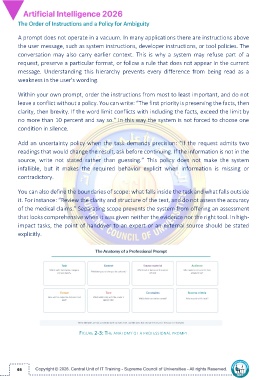
                                    FIGURE 2-3: THE ANATOMY OF A PROFESSIONAL PROMPT


         65

