


Page 44 - CyberSecurityEssentialsEnglish
P. 44
In a field experiment conducted with consultants at a large consulting firm, Dell’Acqua and
         colleagues found that participants using AI completed about 12 percent more tasks, worked
         about 25 percent faster, and produced work of higher quality on tasks that suited the tool.

         On a task deliberately chosen to fall outside its capabilities, however, participants using AI
         were roughly 19 percentage points less likely to reach the correct answer, because they

         relied on its response without recognizing that the task was different [9]. The lesson is that
         the same tool can be highly useful in one task and misleading in another.


         This unevenness occurs partly because some subjects are well represented in training data,
         while local or rare information is less common. A tool may perform well on a language task
         yet struggle with calculation or with following many constraints. One application may also

         use  search  or  a  calculator  while  another,  built  on  the  same  model,  does  not.  There  is
         therefore no fixed list of tasks that AI always performs well.


         A small condition can also change a task’s difficulty. Summarizing a report may be easy, but
         requiring the summary to preserve every legal exception raises the standard substantially.
         Drafting a message may go well, but strict adherence to specialized terminology may expose

         weaknesses.  It  is  better  to  divide  the  task  and  test  its  components:  facts,  calculations,
         wording, format, and sources. This reveals where a model is suitable and where a rule,
         calculator, or expert is needed.


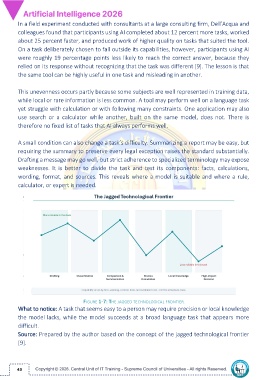
                                      FIGURE 1-7: THE JAGGED TECHNOLOGICAL FRONTIER
         What to notice: A task that seems easy to a person may require precision or local knowledge
         the model lacks, while the model succeeds at a broad language task that appears more
         difficult.

         Source: Prepared by the author based on the concept of the jagged technological frontier
         [9].


         43

