


Page 49 - CyberSecurityEssentialsEnglish
P. 49
Step Three: Prepare a Local Test Set
         Collect five to ten cases that represent the real work; do not choose only easy examples.
         Include a long case, a short case, one with missing information, and one containing local

         terminology or a complex table. Write the acceptance criteria before running the tool so
         that you do not change them after seeing the result.


         Step Four: Run the Experiment and Measure
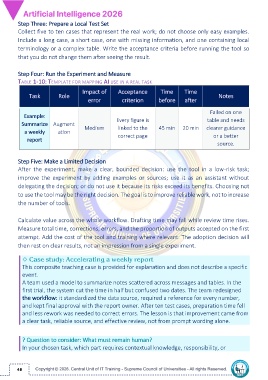
         TABLE 1-10: TEMPLATE FOR MAPPING AI USE IN A REAL TASK

                                      Impact of      Acceptance         Time       Time
              Task         Role                                                                   Notes
                                        error          criterion       before      after

                                                                                              Failed on one
            Example:
                                                     Every figure is                         table and needs
           Summarize  Augment
                                       Medium        linked to the      45 min    20 min     clearer guidance
            a weekly       ation
                                                     correct page                               or a better
             report
                                                                                                  source.


         Step Five: Make a Limited Decision
         After  the  experiment,  make  a  clear,  bounded  decision:  use  the  tool  in  a  low-risk  task;
         improve  the  experiment  by  adding  examples  or  sources;  use  it  as  an  assistant  without

         delegating the decision; or do not use it because its risks exceed its benefits. Choosing not
         to use the tool may be the right decision. The goal is to improve reliable work, not to increase

         the number of tools.

         Calculate value across the whole workflow. Drafting time may fall while review time rises.
         Measure total time, corrections, errors, and the proportion of outputs accepted on the first

         attempt. Add the cost of the tool and training where relevant. The adoption decision will
         then rest on clear results, not an impression from a single experiment.


           ◇ Case study: Accelerating a weekly report
           This composite teaching case is provided for explanation and does not describe a specific
           event.
           A team used a model to summarize notes scattered across messages and tables. In the

           first trial, the system cut the time in half but confused two dates. The team redesigned
           the workflow: it standardized the data source, required a reference for every number,
           and kept final approval with the report owner. After ten test cases, preparation time fell
           and less rework was needed to correct errors. The lesson is that improvement came from
           a clear task, reliable source, and effective review, not from prompt wording alone.


           ? Question to consider: What must remain human?

           In your chosen task, which part requires contextual knowledge, responsibility, or


         48

