


Page 298 - CyberSecurityEssentialsEnglish
P. 298
Chapter Objectives
         Understand the roles AI can play across the research cycle, and the limits that should not be
         crossed.

         Turn a broad topic into a problem, a gap, a research question, and operational definitions
         that can be studied.
         Design a search strategy covering databases, keywords, synonyms, and full documentation

         of the queries.
         Screen sources and appraise relevance, quality, and risk of bias, while recording reasons for
         inclusion and exclusion.

         Read papers and extract evidence into a matrix that preserves the identity of the source, the
         location of the information, and its limits.

         Move  from  summarizing  individual  studies  to  a  synthesis  that  explains  agreement,
         difference, and uncertainty.
         Use AI cautiously in quantitative and qualitative analysis and in writing and reviewing code.
         Write  evidence  reviews,  research  abstracts,  and  policy  briefs  that  tie  every  claim to  an

         appropriate source.
         Verify references, quotations, identifiers, and publication status, and detect fabricated or

         unsuitable references.
         Apply rules of integrity, authorship, disclosure, and confidentiality in research, peer review,
         and publication.

         Create a research record documenting the tools, versions, prompts, decisions, files, and
         revisions.
         Produce a documented evidence map starting from a research question in the practical lab.


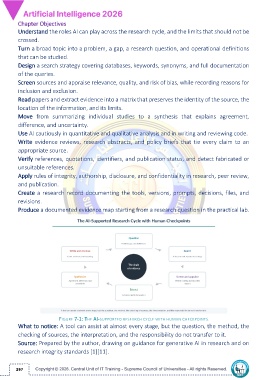
                           FIGURE 7-1: THE AI-SUPPORTED RESEARCH CYCLE WITH HUMAN CHECKPOINTS
         What to notice: A tool can assist at almost every stage, but the question, the method, the
         checking of sources, the interpretation, and the responsibility do not transfer to it.
         Source: Prepared by the author, drawing on guidance for generative AI in research and on

         research integrity standards [1][11].


        297

