


Page 179 - CyberSecurityEssentialsEnglish
P. 179
In everyday tasks, test the output across varied cases: Arabic and foreign names, different
         levels of writing, dialects where relevant, ordinary and borderline cases, and requests that
         do not match the stereotype. Ask the system about the assumptions on which it built the

         result, but do not treat its explanation as proof of its internal mechanism.

           + For the advanced reader: fairness measures can conflict
           We may want demographic parity, so that acceptance rates converge between groups; or
           equal opportunity, so that detection rates among qualified cases converge; or equalized
           odds, so that false positive and false negative rates converge; or calibration, so that a
           probability score means the same thing for every group. No single measure fits every

           context, and several of them cannot be satisfied at once. The choice depends on the type
           of decision, the law, the ethical stakes, and the quality of the data.


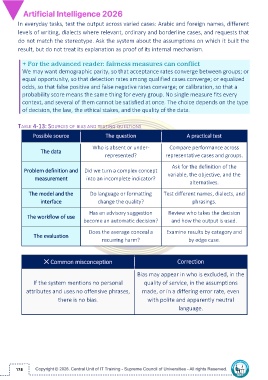
         TABLE 4-13: SOURCES OF BIAS AND TESTING QUESTIONS

                Possible source                 The question                        A practical test

                                          Who is absent or under-           Compare performance across
                   The data
                                                represented?               representative cases and groups.

                                                                             Ask for the definition of the
            Problem definition and  Did we turn a complex concept
                                                                            variable, the objective, and the
                measurement            into an incomplete indicator?
                                                                                     alternatives.

              The model and the          Do language or formatting        Test different names, dialects, and
                   interface                 change the quality?                       phrasings.

                                         Has an advisory suggestion         Review who takes the decision
             The workflow of use
                                      become an automatic decision?          and how the output is used.


                                        Does the average conceal a         Examine results by category and
                The evaluation
                                              recurring harm?                        by edge case.


                     ✕ Common misconception                                     Correction

                                                              Bias may appear in who is excluded, in the

                If the system mentions no personal               quality of service, in the assumptions
             attributes and uses no offensive phrases,          made, or in a differing error rate, even
                           there is no bias.                       with polite and apparently neutral

                                                                                language.


        178

