


Page 182 - CyberSecurityEssentialsEnglish
P. 182
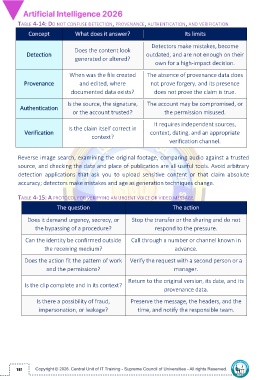
TABLE 4-14: DO NOT CONFUSE DETECTION, PROVENANCE, AUTHENTICATION, AND VERIFICATION

              Concept             What does it answer?                             Its limits

                                                                    Detectors make mistakes, become
                                  Does the content look
             Detection                                            outdated, and are not enough on their
                                  generated or altered?
                                                                      own for a high-impact decision.

                                When was the file created         The absence of provenance data does
            Provenance              and edited, where               not prove forgery, and its presence

                                 documented data exists?              does not prove the claim is true.

                               Is the source, the signature,      The account may be compromised, or
          Authentication
                                 or the account trusted?                  the permission misused.


                                                                     It requires independent sources,
                                Is the claim itself correct in
            Verification                                            context, dating, and an appropriate
                                          context?
                                                                            verification channel.


         Reverse image search, examining the original footage, comparing audio against a trusted
         source, and checking the date and place of publication are all useful tools. Avoid arbitrary

         detection  applications  that  ask  you  to  upload  sensitive  content  or  that  claim  absolute
         accuracy; detectors make mistakes and age as generation techniques change.

         TABLE 4-15: A PROTOCOL FOR VERIFYING AN URGENT VOICE OR VIDEO MESSAGE

                          The question                                        The action

             Does it demand urgency, secrecy, or            Stop the transfer or the sharing and do not
                 the bypassing of a procedure?                        respond to the pressure.


            Can the identity be confirmed outside          Call through a number or channel known in
                     the receiving medium?                                     advance.

            Does the action fit the pattern of work        Verify the request with a second person or a

                      and the permissions?                                    manager.

                                                          Return to the original version, its date, and its
            Is the clip complete and in its context?
                                                                          provenance data.


                 Is there a possibility of fraud,          Preserve the message, the headers, and the
                  impersonation, or leakage?                  time, and notify the responsible team.


        181

