


Page 338 - CyberSecurityEssentialsEnglish
P. 338
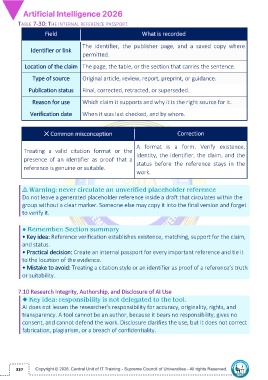
TABLE 7-30: THE INTERNAL REFERENCE PASSPORT

                     Field                                      What is recorded

                                      The  identifier,  the  publisher  page,  and  a  saved  copy  where
               Identifier or link
                                      permitted.


            Location of the claim  The page, the table, or the section that carries the sentence.

               Type of source         Original article, review, report, preprint, or guidance.

              Publication status      Final, corrected, retracted, or superseded.


               Reason for use         Which claim it supports and why it is the right source for it.

              Verification date       When it was last checked, and by whom.


                     ✕ Common misconception                                     Correction


                                                              A  format  is  a  form.  Verify  existence,
            Treating  a  valid  citation  format  or  the
                                                              identity, the identifier, the claim, and the
            presence  of  an  identifier  as  proof  that  a
                                                              status  before  the  reference  stays  in  the
            reference is genuine or suitable.
                                                              work.


           ⚠ Warning: never circulate an unverified placeholder reference
           Do not leave a generated placeholder reference inside a draft that circulates within the
           group without a clear marker. Someone else may copy it into the final version and forget
           to verify it.

           ● Remember: Section summary

           • Key idea: Reference verification establishes existence, matching, support for the claim,
           and status.
           • Practical decision: Create an internal passport for every important reference and tie it
           to the location of the evidence.
           • Mistake to avoid: Treating a citation style or an identifier as proof of a reference’s truth

           or suitability.


         7.10 Research Integrity, Authorship, and Disclosure of AI Use
           ◆ Key idea: responsibility is not delegated to the tool.
           AI does not lessen the researcher’s responsibility for accuracy, originality, rights, and
           transparency. A tool cannot be an author, because it bears no responsibility, gives no
           consent, and cannot defend the work. Disclosure clarifies the use, but it does not correct

           fabrication, plagiarism, or a breach of confidentiality.


        337

