


Page 319 - CyberSecurityEssentialsEnglish
P. 319
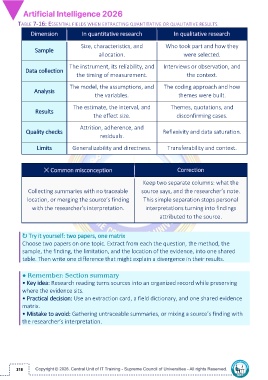
TABLE 7-16: ESSENTIAL FIELDS WHEN EXTRACTING QUANTITATIVE OR QUALITATIVE RESULTS

               Dimension             In quantitative research                 In qualitative research

                                     Size, characteristics, and            Who took part and how they
                 Sample
                                             allocation.                           were selected.


                                The instrument, its reliability, and      Interviews or observation, and
            Data collection
                                   the timing of measurement.                       the context.

                                The model, the assumptions, and           The coding approach and how
                Analysis
                                           the variables.                       themes were built.

                                  The estimate, the interval, and            Themes, quotations, and
                 Results
                                           the effect size.                    disconfirming cases.

                                     Attrition, adherence, and
             Quality checks                                              Reflexivity and data saturation.
                                             residuals.

                 Limits          Generalizability and directness.          Transferability and context.


                     ✕ Common misconception                                     Correction


                                                                Keep two separate columns: what the
              Collecting summaries with no traceable            source says, and the researcher’s note.
             location, or merging the source’s finding           This simple separation stops personal

               with the researcher’s interpretation.              interpretations turning into findings
                                                                        attributed to the source.


           ↻ Try it yourself: two papers, one matrix

           Choose two papers on one topic. Extract from each the question, the method, the
           sample, the finding, the limitation, and the location of the evidence, into one shared
           table. Then write one difference that might explain a divergence in their results.

           ● Remember: Section summary

           • Key idea: Research reading turns sources into an organized record while preserving
           where the evidence sits.
           • Practical decision: Use an extraction card, a field dictionary, and one shared evidence
           matrix.
           • Mistake to avoid: Gathering untraceable summaries, or mixing a source’s finding with
           the researcher’s interpretation.


        318

