


Page 201 - CyberSecurityEssentialsEnglish
P. 201
Chapter Objectives
         Distinguish among a task, a process, a workflow, and a standard operating procedure.
         Turn a result that succeeded once into repeatable steps, with clear inputs, outputs, and

         acceptance criteria.

         Locate AI inside a process rather than making it responsible for the whole process.
         Use patterns such as chaining, routing, parallelization, orchestrator and workers, evaluator
         and optimizer, and human approval.


         Build practical workflows for documents and communication, for meetings and decisions,

         and for data and institutional briefing, with short examples for translation, presentations,
         and policies.

         Build  templates,  prompt  libraries,  and  version  records  that  help  teams  benefit  from
         successful experiments.


         Measure real productivity through cycle time, rework, first-pass yield, and the cost of review.

         Produce a complete institutional briefing pack in the final practical lab.


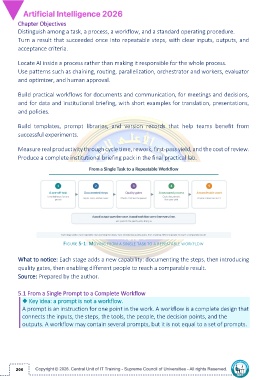
                             FIGURE 5-1: MOVING FROM A SINGLE TASK TO A REPEATABLE WORKFLOW


         What to notice: Each stage adds a new capability: documenting the steps, then introducing
         quality gates, then enabling different people to reach a comparable result.

         Source: Prepared by the author.

         5.1 From a Single Prompt to a Complete Workflow

           ◆ Key idea: a prompt is not a workflow.
           A prompt is an instruction for one point in the work. A workflow is a complete design that
           connects the inputs, the steps, the tools, the people, the decision points, and the
           outputs. A workflow may contain several prompts, but it is not equal to a set of prompts.


        200

