


Page 125 - CyberSecurityEssentialsEnglish
P. 125
When a question arrives, the system may rewrite the query, then use lexical, semantic, or
         hybrid search. The results are reranked, the passages to be sent to the model are selected,
         and the answer is generated with links or page numbers. Two separate stages must be

         evaluated: did the system fetch the right evidence, and did the model use it faithfully without
         distortion  or  overreach?  The  quality  of  this  stage  depends  on  the  retrieval models,  the

         semantic representations, the reranking, and the standardized evaluation of embeddings, as
         the  literature  on  dense  passage  retrieval,  sentence  embeddings,  and  embedding
         benchmarks makes clear [18][19][20].

         The  quality  of  retrieval  also  depends  on  governance.  Document  permissions  must  be

         respected, a user must be prevented from retrieving material they are not entitled to see,
         the index must be updated when a version changes, malicious instructions inside files must
         be  handled,  and  the  passages  that  supported  an  answer  must  be  logged.  Grounding  in

         sources does not automatically equal correctness; the source itself may be outdated or
         inappropriate.


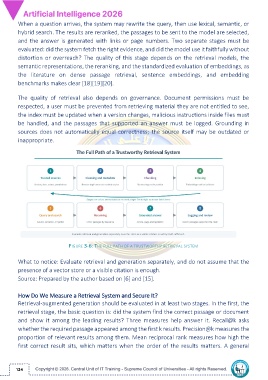
                                FIGURE 3-6: THE FULL PATH OF A TRUSTWORTHY RETRIEVAL SYSTEM


         What to notice: Evaluate retrieval and generation separately, and do not assume that the
         presence of a vector store or a visible citation is enough.
         Source: Prepared by the author based on [6] and [15].


         How Do We Measure a Retrieval System and Secure It?
         Retrieval-augmented generation should be evaluated in at least two stages. In the first, the

         retrieval stage, the basic question is: did the system find the correct passage or document
         and  show  it  among  the  leading  results?  Three  measures  help  answer  it.  Recall@k  asks
         whether the required passage appeared among the first k results. Precision@k measures the

         proportion of relevant results among them. Mean reciprocal rank measures how high the
         first correct result sits, which matters when the order of the results matters. A general


        124

