


Page 387 - CyberSecurityEssentialsEnglish
P. 387
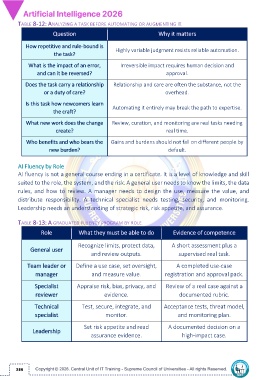
TABLE 8-12: ANALYZING A TASK BEFORE AUTOMATING OR AUGMENTING IT

                         Question                                      Why it matters

             How repetitive and rule-bound is
                                                    Highly variable judgment resists reliable automation.
                         the task?

              What is the impact of an error,          Irreversible impact requires human decision and

                  and can it be reversed?                                  approval.

            Does the task carry a relationship     Relationship and care are often the substance, not the
                     or a duty of care?                                    overhead.

            Is this task how newcomers learn
                                                   Automating it entirely may break the path to expertise.
                         the craft?

             What new work does the change         Review, curation, and monitoring are real tasks needing

                          create?                                          real time.

             Who benefits and who bears the       Gains and burdens should not fall on different people by
                       new burden?                                          default.


         AI Fluency by Role

         AI fluency is not a general course ending in a certificate. It is a level of knowledge and skill
         suited to the role, the system, and the risk. A general user needs to know the limits, the data
         rules, and how to review. A manager needs to design the use, measure the value, and
         distribute  responsibility.  A  technical  specialist  needs  testing,  security,  and  monitoring.

         Leadership needs an understanding of strategic risk, risk appetite, and assurance.

         TABLE 8-13: A GRADUATED FLUENCY PROGRAM BY ROLE

                   Role             What they must be able to do              Evidence of competence

                                    Recognize limits, protect data,          A short assessment plus a
               General user
                                          and review outputs.                   supervised real task.

             Team leader or        Define a use case, set oversight,           A completed use-case
                 manager                  and measure value.              registration and approval pack.

                 Specialist        Appraise risk, bias, privacy, and       Review of a real case against a

                 reviewer                      evidence.                         documented rubric.

                Technical            Test, secure, integrate, and         Acceptance tests, threat model,
                 specialist                     monitor.                        and monitoring plan.


                                      Set risk appetite and read            A documented decision on a
                Leadership
                                         assurance evidence.                      high-impact case.


        386

