


Page 329 - CyberSecurityEssentialsEnglish
P. 329
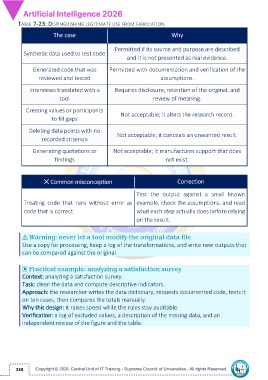
TABLE 7-23: DISTINGUISHING LEGITIMATE USE FROM FABRICATION

                         The case                                            Why


                                                    Permitted if its source and purpose are described
            Synthetic data used to test code
                                                         and it is not presented as real evidence.

                Generated code that was           Permitted with documentation and verification of the

                  reviewed and tested                                   assumptions.

              Interviews translated with a          Requires disclosure, retention of the original, and
                            tool                                     review of meaning.


             Creating values or participants
                                                       Not acceptable; it alters the research record.
                        to fill gaps

              Deleting data points with no
                                                     Not acceptable; it conceals an unwanted result.
                    recorded criterion

                Generating quotations or           Not acceptable; it manufactures support that does
                         findings                                          not exist.


                     ✕ Common misconception                                     Correction

                                                              Test  the  output  against  a  small  known
            Treating  code  that  runs  without  error  as  example, check the assumptions, and read

            code that is correct.                             what each step actually does before relying
                                                              on the result.


           ⚠ Warning: never let a tool modify the original data file
           Use a copy for processing, keep a log of the transformations, and write new outputs that
           can be compared against the original.

           ▣ Practical example: analyzing a satisfaction survey

           Context: analyzing a satisfaction survey.
           Task: clean the data and compute descriptive indicators.
           Approach: the researcher writes the data dictionary, requests documented code, tests it
           on ten cases, then compares the totals manually.
           Why this design: it raises speed while the rules stay auditable.
           Verification: a log of excluded values, a description of the missing data, and an

           independent review of the figure and the table.


        328

