


Page 310 - CyberSecurityEssentialsEnglish
P. 310
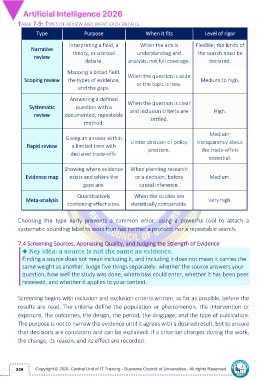
TABLE 7-9: TYPES OF REVIEW AND WHAT EACH ENTAILS
                 Type                 Purpose                     When it fits              Level of rigor


                                Interpreting a field, a        When the aim is          Flexible; the limits of
               Narrative
                                 theory, or a broad           understanding and          the search must be
                review
                                       debate.            analysis, not full coverage.        declared.

                               Mapping a broad field,
                                                          When the question is wide
            Scoping review     the types of evidence,                                     Medium to high.
                                                              or the topic is new.
                                    and the gaps.

                                Answering a defined
                                                          When the question is clear
              Systematic           question with a
                                                           and inclusion criteria are           High.
                review        documented, repeatable
                                                                    settled.
                                      method.

                                                                                              Medium;
                              Giving an answer within
                                                           Under decision or policy      transparency about
             Rapid review        a limited time with
                                                                   pressure.               the trade-offs is
                                declared trade-offs.
                                                                                              essential.

                              Showing where evidence       When planning research
            Evidence map        exists and where the         or a decision, before            Medium.
                                      gaps are.                causal inference.


                                   Quantitatively            When the studies are
             Meta-analysis                                                                    Very high.
                               combining effect sizes.     statistically comparable.

         Choosing  the  type  early  prevents  a  common  error:  using  a  powerful  tool  to  attach  a

         systematic-sounding label to work that has neither a protocol nor a repeatable search.

         7.4 Screening Sources, Appraising Quality, and Judging the Strength of Evidence
           ◆ Key idea: a source is not the same as evidence.

           Finding a source does not mean including it, and including it does not mean it carries the
           same weight as another. Judge five things separately: whether the source answers your
           question, how well the study was done, where bias could enter, whether it has been peer
           reviewed, and whether it applies to your context.


         Screening begins with inclusion and exclusion criteria written, as far as possible, before the
         results are read. The criteria define the population or phenomenon, the intervention or
         exposure, the outcomes, the design, the period, the language, and the type of publication.

         The purpose is not to narrow the evidence until it agrees with a desired result, but to ensure
         that decisions are consistent and can be explained. If a criterion changes during the work,

         the change, its reason, and its effect are recorded.


        309

