


Page 39 - CyberSecurityEssentialsEnglish
P. 39
✓  Fake Online Stores
               Not all online stores are legitimate. Some of them are run by cybercriminals who want to steal your cash and
               personal data. Scammers pose as internet retailers and advertise their products, but they never fulfill orders.
               They sometimes post promotions that seem too good to be valid on social media.
           ✓  Data breaches
               When hackers access data from web applications without authorization, a data breach happens. You risk having
               your information exposed in the event of a data breach when you submit your personal information to websites
               while shopping online.
           ✓  Unsecured WIFI
               Using unencrypted WIFI for online shopping is not a good idea because it enables data transfer between
               networks.
           ✓  Spamming
               Viral links can be sent through email or social media inboxes by some dishonest actors. Additionally, they can
               include these URLs in blog comments, messages, and contact form submissions.


       Protective Guidelines on The Buyer’s Side
       Spotting Scam Websites
       Any unreliable internet site that is used to trick people into engaging in fraud or malicious attacks is a scam
       website. Scammers use the internet anonymity to hide their genuine selves and motives beneath numerous
       guises. These could consist of phony security alerts, gifts, and other dishonest formats that seem legitimate.
       Therefore, this section starts with listing various scam website types, followed by tips to detect those sites.

       Types of scam websites
       Phishing scam websites
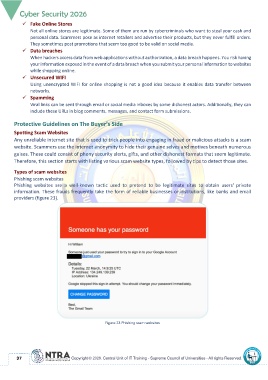
       Phishing  websites  are  a  well-known  tactic  used  to  pretend  to  be  legitimate  sites  to  obtain  users'  private
       information. These frauds frequently take the form of reliable businesses or institutions, like banks and email
       providers (figure 23).


                                                Figure 23 Phishing scam websites


          37

