


Page 21 - CyberSecurityEssentialsEnglish
P. 21
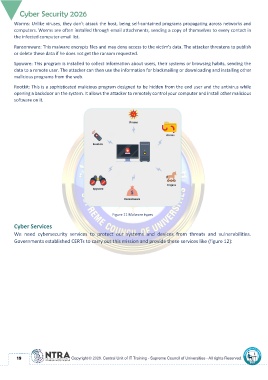
Worms: Unlike viruses, they don't attack the host, being self-contained programs propagating across networks and
       computers. Worms are often installed through email attachments, sending a copy of themselves to every contact in
       the infected computer email list.
       Ransomware: This malware encrypts files and may deny access to the victim's data. The attacker threatens to publish
       or delete these data if he does not get the ransom requested.

       Spyware: This program is installed to collect information about users, their systems or browsing habits, sending the
       data to a remote user. The attacker can then use the information for blackmailing or downloading and installing other
       malicious programs from the web.
       Rootkit: This is a sophisticated malicious program designed to be hidden from the end user and the antivirus while
       opening a backdoor on the system. It allows the attacker to remotely control your computer and install other malicious
       software on it.


                                                   Figure 11 Malware types

       Cyber Services
       We  need  cybersecurity  services  to  protect  our  systems  and  devices  from  threats  and  vulnerabilities.
       Governments established CERTs to carry out this mission and provide these services like (figure 12):


          19

