


Page 370 - CyberSecurityEssentialsEnglish
P. 370
Not every use case should pass through the same procedures. Rewording a non-sensitive
         internal announcement does not need a full impact assessment, while using a system to rank
         job  applicants,  recommend  a  treatment,  or  prioritize  a  public  service  requires  deeper

         examination. Proportionate classification makes governance faster, because it directs effort
         where it is deserved.


         Five questions settle the level: how large is the potential harm? Who is affected? Can the

         decision be reversed? Does the system use sensitive data or take an external action? And
         can the affected person object or reach a human alternative? Looking at the name of the
         tool is not enough; the same model may be low risk in brainstorming and high risk when it

         enters an employment decision.

         Meaningful human oversight is not achieved by placing an employee in front of an approval
         button. The  reviewer  must  hold  appropriate  understanding,  sufficient  time, information
         about  the  limits  of  the  system,  real  authority  to  reject  and  amend,  and  a  route  for

         documenting the reason. If the culture penalizes whoever disagrees with the system, or if
         the interface hides uncertainty, the review becomes a formality.


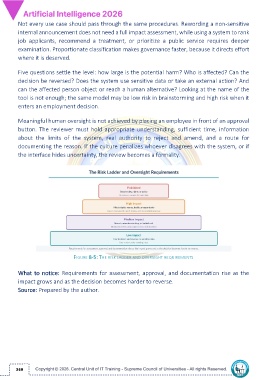
                                  FIGURE 8-5: THE RISK LADDER AND OVERSIGHT REQUIREMENTS


         What to notice: Requirements for assessment, approval, and documentation rise as the
         impact grows and as the decision becomes harder to reverse.

         Source: Prepared by the author.


        369

