


Page 138 - CyberSecurityEssentialsEnglish
P. 138
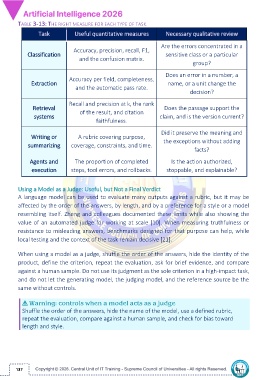
TABLE 3-13: THE RIGHT MEASURE FOR EACH TYPE OF TASK

                  Task            Useful quantitative measures             Necessary qualitative review

                                                                         Are the errors concentrated in a
                                  Accuracy, precision, recall, F1,
             Classification                                                sensitive class or a particular
                                    and the confusion matrix.
                                                                                       group?

                                                                           Does an error in a number, a
                                Accuracy per field, completeness,
               Extraction                                                   name, or a unit change the
                                   and the automatic pass rate.
                                                                                     decision?

                                Recall and precision at k, the rank
                Retrieval                                                 Does the passage support the
                                    of the result, and citation
                systems                                                 claim, and is the version current?
                                            faithfulness.

                                                                         Did it preserve the meaning and
               Writing or           A rubric covering purpose,
                                                                          the exceptions without adding
             summarizing         coverage, constraints, and time.
                                                                                       facts?

              Agents and          The proportion of completed                Is the action authorized,
               execution         steps, tool errors, and rollbacks.        stoppable, and explainable?


         Using a Model as a Judge: Useful, but Not a Final Verdict
         A language model can be used to evaluate many outputs against a rubric, but it may be
         affected by the order of the answers, by length, and by a preference for a style or a model
         resembling itself. Zheng and colleagues documented these limits while also showing the

         value of an automated judge for working at scale [10]. When measuring truthfulness or
         resistance to misleading answers, benchmarks designed for that purpose can help, while

         local testing and the context of the task remain decisive [21].

         When using a model as a judge, shuffle the order of the answers, hide the identity of the
         product, define the criterion, repeat the evaluation, ask for brief evidence, and compare
         against a human sample. Do not use its judgment as the sole criterion in a high-impact task,

         and do not let the generating model, the judging model, and the reference source be the
         same without controls.

           ⚠ Warning: controls when a model acts as a judge
           Shuffle the order of the answers, hide the name of the model, use a defined rubric,
           repeat the evaluation, compare against a human sample, and check for bias toward

           length and style.


        137

