


Page 137 - CyberSecurityEssentialsEnglish
P. 137
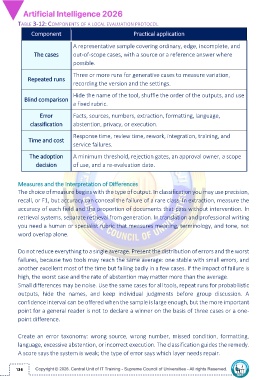
TABLE 3-12: COMPONENTS OF A LOCAL EVALUATION PROTOCOL

               Component                                    Practical application

                                  A representative sample covering ordinary, edge, incomplete, and
                The cases         out-of-scope cases, with a source or a reference answer where

                                  possible.

                                  Three or more runs for generative cases to measure variation,
             Repeated runs
                                  recording the version and the settings.


                                  Hide the name of the tool, shuffle the order of the outputs, and use
            Blind comparison
                                  a fixed rubric.

                   Error          Facts, sources, numbers, extraction, formatting, language,

              classification      abstention, privacy, or execution.

                                  Response time, review time, rework, integration, training, and
              Time and cost
                                  service failures.

              The adoption        A minimum threshold, rejection gates, an approval owner, a scope

                 decision         of use, and a re-evaluation date.


         Measures and the Interpretation of Differences
         The choice of measure begins with the type of output. In classification you may use precision,

         recall, or F1, but accuracy can conceal the failure of a rare class. In extraction, measure the
         accuracy of each field and the proportion of documents that pass without intervention. In
         retrieval systems, separate retrieval from generation. In translation and professional writing

         you need a human or specialist rubric that measures meaning, terminology, and tone, not
         word overlap alone.


         Do not reduce everything to a single average. Present the distribution of errors and the worst
         failures, because two tools may reach the same average: one stable with small errors, and

         another excellent most of the time but failing badly in a few cases. If the impact of failure is
         high, the worst case and the rate of abstention may matter more than the average.
         Small differences may be noise. Use the same cases for all tools, repeat runs for probabilistic
         outputs,  hide  the  names,  and  keep  individual  judgments  before  group  discussion.  A

         confidence interval can be offered when the sample is large enough, but the more important
         point for a general reader is not to declare a winner on the basis of three cases or a one-

         point difference.

         Create  an  error  taxonomy:  wrong source,  wrong  number,  missed condition, formatting,

         language, excessive abstention, or incorrect execution. The classification guides the remedy.
         A score says the system is weak; the type of error says which layer needs repair.


        136

