


Page 59 - CyberSecurityEssentialsEnglish
P. 59
Chapter Objectives

          Understand prompting and prompt engineering as a process of design and testing, not
          merely elegant wording.
          Distinguish among asking, instructing, and staged collaboration, and choose the level that
          matches the clarity and complexity of the task.

          Build  a  professional  prompt  that  defines  the  task,  context,  source  material,  audience,
          format, tone, constraints, and success criteria.

          Use the PACFT framework, a teaching aid prepared by the author, as a quick recall tool,
          while knowing its limits.
          Use examples, follow-up prompts, structured evaluation, and the discipline of changing one

          factor at a time.
          Understand  how  generation  settings  such  as  temperature  affect  variation,  and  why
          variation is not the same as knowledge.

          Understand the difference between prompting general models and prompting reasoning
          models, and avoid treating the length of an explanation as evidence that it is correct.
          Use structured outputs and schema validation when a task requires a strict structure.

          Reduce sycophancy, and treat confidence statements and self-critique with appropriate
          caution.
          Handle images, files, Arabic-language work, long documents, and large context in a practical

          way.
          Recognize when the problem is not the prompt, and when the source, model, tool, or
          workflow should change instead.

          Build a small library of tested templates, with versions and evaluation cases, rather than
          collecting prompts copied from the internet.


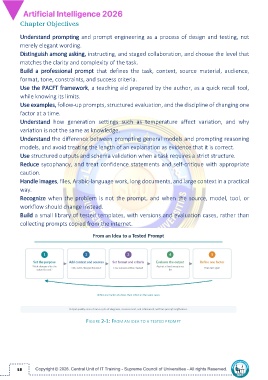
                                       FIGURE 2-1: FROM AN IDEA TO A TESTED PROMPT


         58

